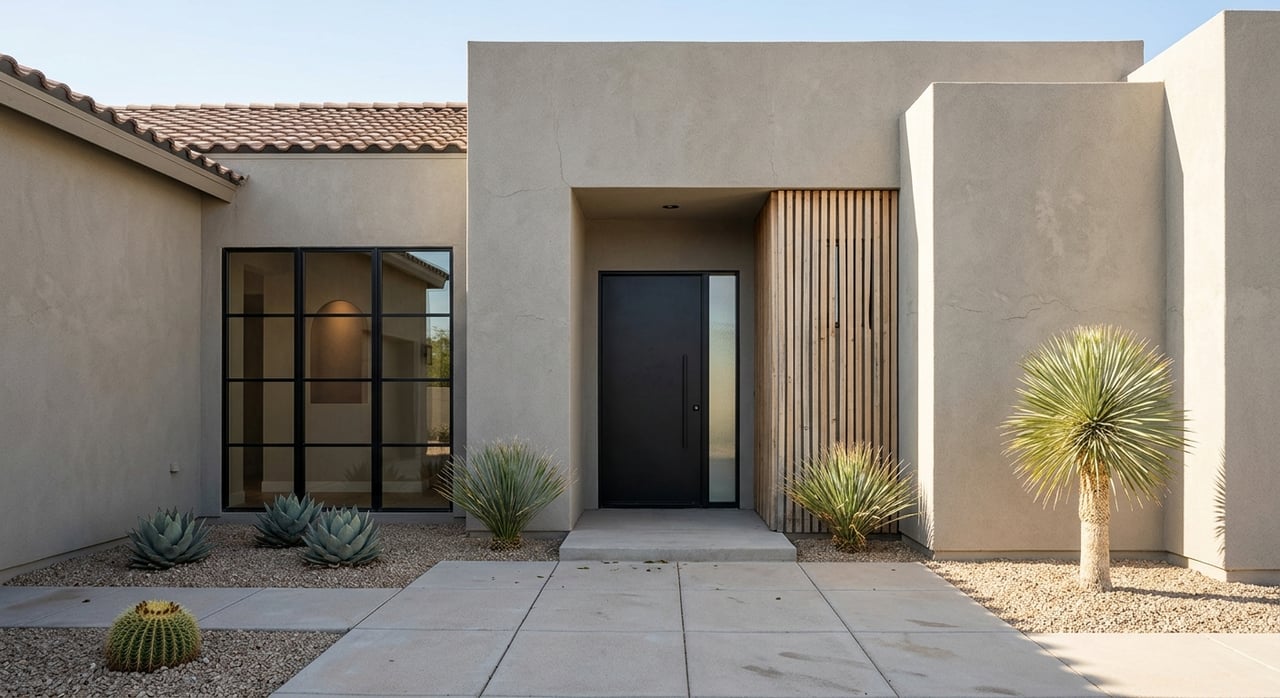
If you have ever driven through MacDonald Highlands and felt like the homes somehow belong to the land around them, you are noticing one of the community’s biggest design strengths. In this Henderson hillside enclave, architecture is not just about curb appeal. It is shaped by mountain terrain, long valley views, and design standards that create a cohesive look without forcing every home to match. If you are exploring the area as a buyer, seller, or simply trying to understand what makes this community stand out, this guide will walk you through the architectural styles that define MacDonald Highlands. Let’s dive in.
Why architecture matters here
MacDonald Highlands is a 1,320-acre, 24-hour guard-gated community in Henderson, set in the foothills of the McCullough Mountains above the Las Vegas Valley. Its setting gives many homes panoramic views of the Strip, skyline, mountains, and golf course, which makes architecture a central part of the living experience.
From the beginning, the community emphasized open space, low density, and mountainside preservation. Its history also notes a Frank Lloyd Wright-inspired architectural approach, which helps explain why so many homes feel grounded, horizontal, and connected to the surrounding desert.
The defining idea: Desert Elegance
Rather than enforce one strict look, MacDonald Highlands uses a broader architectural framework called Desert Elegance. The goal is to blend styles while keeping the overall community visually cohesive and compatible with the desert setting.
This design language focuses on simple, strong forms instead of heavy ornament. You will often see horizontal massing, clean lines, terraces, courtyards, and a restrained exterior palette that helps homes blend into the mountainside rather than compete with it.
What Desert Elegance looks like
In practical terms, Desert Elegance shows up through a few recurring design features:
- Strong horizontal forms
- Minimal ornamentation
- Terraces and courtyards
- Earth-toned exterior colors
- Materials selected to blend with the desert landscape
- Architecture designed to respond to sun, slope, and views
That approach gives the community a polished, high-end identity, even though individual homes may lean more modern or more classically inspired.
Contemporary homes lead the current look
Today, MacDonald Highlands strongly leans toward contemporary custom design. Community marketing highlights glass-forward homes, disappearing walls, floating terraces, protruding decks, and even copper roofs, all of which point to a modern desert aesthetic.
This contemporary direction fits the location well. Large expanses of glass can frame dramatic views, while open layouts and indoor-outdoor transitions make it easier to enjoy terraces, patios, and courtyards throughout the year.
Common contemporary features
Many of the homes and featured collections in the community share design elements such as:
- Open floor plans
- Single- and multi-story layouts
- Large walls of glass
- Courtyards and covered outdoor living areas
- Terraces and elevated decks
- Clean-lined exterior massing
- View-oriented room placement
If you are drawn to sleek, custom luxury homes with a strong indoor-outdoor connection, this is one of the clearest architectural themes you will notice in MacDonald Highlands.
Classic influences still have a place
Even with the modern lean, MacDonald Highlands is not limited to one exact style. The design guidelines specifically allow influences such as Contemporary, Spanish, and French Chateau for production homes, as long as the final design remains compatible with the desert and mountain environment.
That flexibility is important because it keeps the neighborhood from feeling repetitive. You may see homes with more classical symmetry or traditional rooflines, but they still tend to follow the same broader design principles of restrained colors, strong forms, and site-sensitive placement.
Why the mix still feels cohesive
The community stays visually unified because the review standards focus on compatibility rather than imitation. Even when homes draw from different architectural traditions, they are expected to work with the same natural setting and community character.
That means the overall feel is less about picking one historic style and more about creating a consistent luxury environment shaped by the desert landscape.
Hillside design shapes the homes
One of the biggest reasons MacDonald Highlands looks different from many other luxury communities is that the land itself plays such a major role in design. The architecture here is not simply dropped onto a flat lot. It is adapted to the slope, views, and surrounding topography.
The design standards call for homes to step down the hillside to minimize grading. Roof pitches are also expected to follow the natural slope, which helps structures feel more integrated with the terrain.
View corridors matter
Views are treated as a key part of the architecture. Major rooms, patios, and terraces should be oriented to capture dramatic vistas, and homes are sited to avoid blocking neighboring view corridors.
That creates a community where architecture is tied closely to what you see from inside the home as well as from the street. In some cases, the review committee may even allow extra fill on the lower side of a building envelope to help capture golf-course views.
Materials support the desert setting
The materials used in MacDonald Highlands are another big part of its identity. The community favors natural-looking, desert-friendly materials that feel appropriate for the climate and landscape.
Preferred materials include stone, sandstone, slate, split-face CMU, brick, stucco or plaster, and glass. These choices help create texture and depth while keeping the exterior palette grounded and refined.
Colors stay restrained
Color standards also reinforce the community’s overall look. Earth tones such as buff, sand, beige, and gray are favored, while crisp whites, pastels, and bright colors are not permitted.
That restrained palette helps the homes sit more quietly within the mountain setting. It also supports the community’s luxury feel by avoiding trends that could look visually harsh against the desert backdrop.
Climate response is part of the design
In MacDonald Highlands, style and function work together. The guidelines emphasize large overhangs and covered porches for shade, which is an important response to the Southern Nevada climate.
This is one reason the homes often feel comfortable and intentional rather than overly decorative. Features like shade structures, courtyards, and protected outdoor areas are not just aesthetic choices. They also help support day-to-day livability in a sunny hillside environment.
Wrap-around architecture adds polish
Another detail that stands out is the requirement for wrap-around architecture. All four sides of a home should receive consistent detailing, rather than placing most of the design effort only on the front elevation.
That standard matters in a community with elevated lots, open sightlines, and neighboring homes that may be viewed from multiple angles. It helps preserve the polished, custom quality that buyers often expect in MacDonald Highlands.
What makes MacDonald Highlands distinct
Many luxury communities have attractive homes, but MacDonald Highlands stands apart because its identity comes from a full design framework. The combination of hillside topography, preserved view corridors, restrained materials, and flexible but carefully reviewed architecture creates a look that feels both elevated and cohesive.
In other words, the community is not defined by a single house style. It is defined by how homes respond to the land, the light, and the views.
What buyers and sellers should notice
If you are buying in MacDonald Highlands, understanding the architecture can help you read value more clearly. A home’s orientation, terrace placement, use of glass, relationship to the slope, and compatibility with the community design language all contribute to how the property lives and how it may be perceived in the market.
If you are selling, these same details can shape how your home should be presented. Architectural storytelling matters in a community like this because buyers are often responding to more than square footage. They are also responding to view experience, site design, and the sense that the home belongs in this specific hillside setting.
Why this matters in Henderson luxury real estate
MacDonald Highlands is officially located in Henderson, but it occupies a very distinct place within the broader valley market. Its elevated setting, custom homesites, and design-driven identity make it feel different from neighborhoods where lot plans or production layouts play a larger role.
For that reason, buyers often benefit from understanding not just the home itself, but the design rules and architectural patterns that shape the entire community. That kind of local context can make your search more focused and your decisions more confident.
When you want thoughtful guidance on luxury communities like MacDonald Highlands, Karen Ventura offers white-glove support with local insight, responsive communication, and a client-first approach that helps you move forward with clarity.
FAQs
What architectural style is most common in MacDonald Highlands?
- MacDonald Highlands is best defined by its Desert Elegance design framework, with many current homes leaning contemporary and custom rather than following one rigid style.
How does hillside design affect homes in MacDonald Highlands?
- Homes are designed to step with the natural slope, preserve view corridors, and orient major rooms, patios, and terraces toward mountain, golf-course, or valley views.
Are only modern homes allowed in MacDonald Highlands?
- No. The design guidelines allow influences such as Contemporary, Spanish, and French Chateau, as long as the home remains compatible with the desert setting and community character.
What exterior materials are common in MacDonald Highlands homes?
- Common materials include stone, sandstone, slate, split-face CMU, brick, stucco or plaster, and glass, all selected to blend with the surrounding landscape.
Why do homes in MacDonald Highlands feel visually cohesive?
- The community uses design standards focused on strong forms, restrained colors, desert-friendly materials, wrap-around detailing, and site-sensitive placement, which helps different homes feel connected overall.
